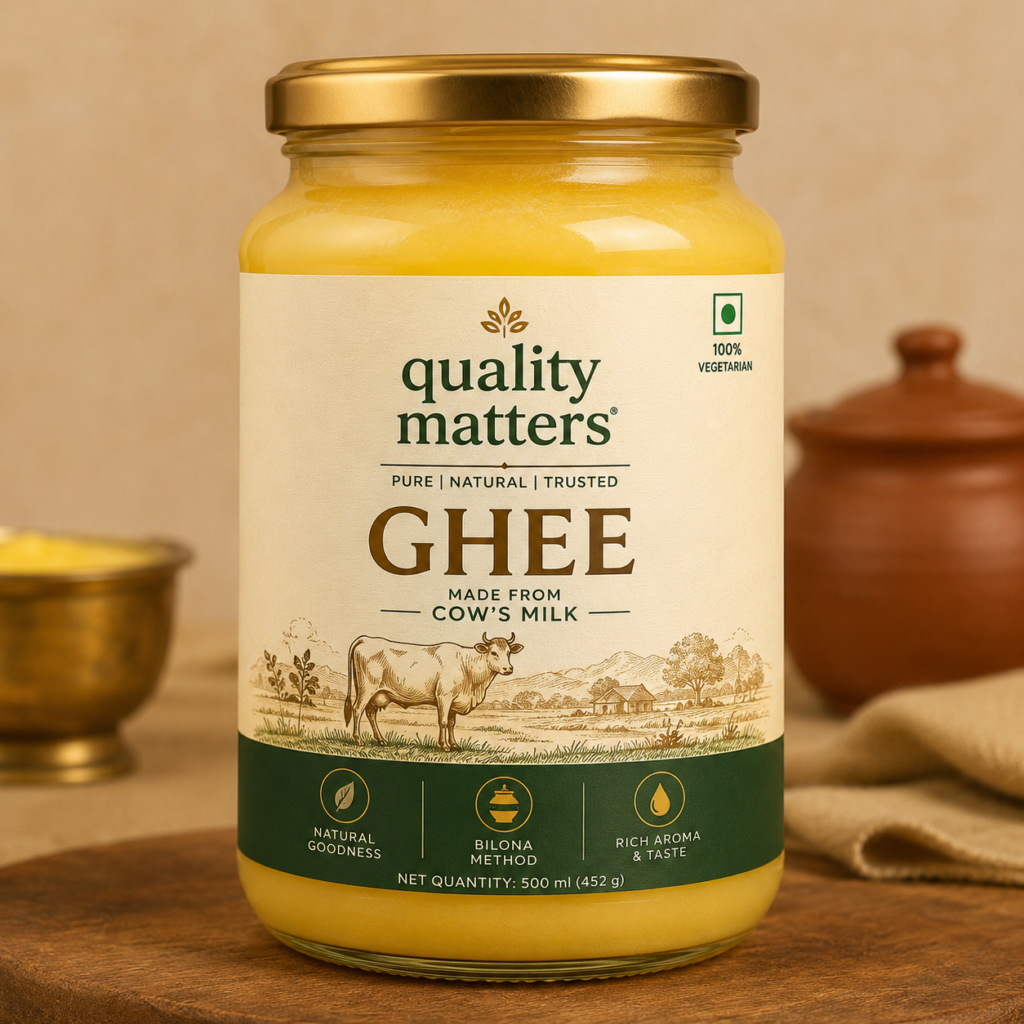
Let’s be honest—buying A2 Cow ghee in India has become a bit of a minefield lately. Walking down the dairy aisle in 2026, every second jar claims to be “100% Pure” or “Vedic,” but if you’ve ever tasted the ghee your grandmother used to make, you know most of these store-bought brands don’t even come close.
If you’re tired of that greasy, chemical aftertaste and want the real stuff, here is what you actually need to look for A2 Cow ghee.
1. Forget “Organic”—Look for “A2 Cow ghee.”
In 2026, the word “organic” is just the baseline. The real magic happens with the Bilona method.
Most big companies use “cream separation” (basically spinning milk at high speeds), which kills the nutrients. True pure A2 Cow ghee is made by turning milk into curd, then hand-churning that curd into butter. It’s a slow process, which is why the good stuff costs more.
The Golden Checklist:
- Breed Matters: Look for A2 milk from Desi cows like Gir or Sahiwal.
- Grass-Fed: If the cows aren’t grazing on green pastures, the ghee won’t have that deep yellow, medicinal quality.
- The Aroma: Real ghee should smell nutty and nostalgic, not like flavor enhancers.
2. The Brands Actually Winning in 2026
I’ve looked into the latest purity reports, and a few names are consistently topping the charts for transparency:
- Nuclear Farm: They’ve gained a massive following recently because they actually publish their 3rd-party lab results. Their texture is perfectly danedaar (grainy).
- Two Brothers Organic Farms: These guys are the OGs of the movement. It’s pricey, but you’re paying for regenerative farming that actually helps the soil.
- Shahji Ghee: Excellent for those who want that traditional Sahiwal cow flavor profile.
- Anveshan: Great if you love tech—you can usually scan a QR code on the jar to see exactly which farm your ghee came from.
3. Two “Quick & Dirty” Purity Tests
You don’t need a lab to spot fake ghee. Try these in your kitchen:
- The Panic Melt: Put a spoonful in a hot pan. If it turns dark brown almost instantly, it’s pure. If it stays light yellow and takes forever to melt, it’s likely mixed with vegetable oils or palm oil.
- The Palm Rub: Rub a bit on the back of your hand. Pure ghee should disappear into your skin (it’s a great moisturizer!) and leave a lingering scent. If it feels sticky or waxy, throw it out.
Why should you care?
Beyond just the taste, real A2 ghee is basically “brain food.” In 2026, we’re seeing more people use it for its Butyric Acid (great for your gut) and its high smoke point, which makes it way safer for deep-frying than those “heart-friendly” vegetable oils that oxidize the moment they get hot.
My advice? Stop buying the 1L plastic tubs from the supermarket. Find a brand that uses glass jars, supports local farmers, and treats their cows with respect. Your gut (and your dal tadka) will thank you.